
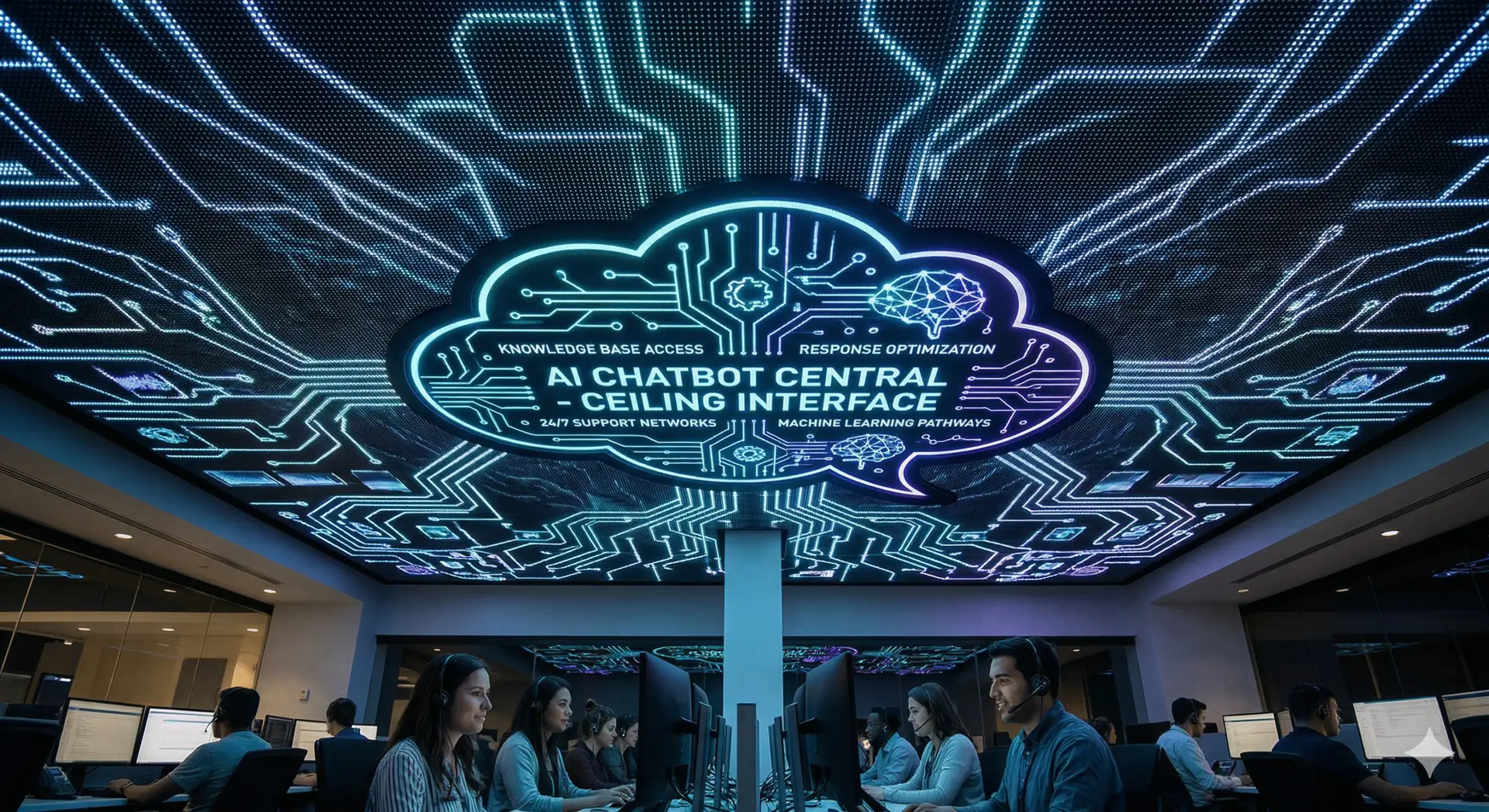
1. Introduction: Breaking the “Chatbot Ceiling”
For the past twenty-four months, the enterprise relationship with Artificial Intelligence has been defined by a reactive, siloed interaction model. We open a browser tab, type a prompt into ChatGPT or Claude, wait for a response, copy-paste the result, and close the tab. This is the “Chatbot Ceiling”—a plateau where AI remains a peripheral tool rather than a core operational driver. While individual productivity may tick upward, the systemic structure of the business remains unchanged.
How to Build Your First AI Agent
In this guide, we will explore how to build your first AI agent, providing a step-by-step approach to mastering this technology.
Understanding how to build your first AI agent requires familiarity with both the technical and strategic aspects of AI deployment.
By learning how to build your first AI agent, you can stay ahead in the rapidly evolving digital landscape.
To comprehend the differences, we will also discuss how to build your first AI agent versus traditional chatbots.
As we enter 2026, the paradigm is shifting from conversation to orchestration. We are moving from tools that simply process language to “Digital Employees”—autonomous agentic systems that reason, plan, and execute multi-step workflows with minimal human intervention. According to the Forrester Total Economic Impact™ study, this shift isn’t merely a technical upgrade; it is a financial imperative. Enterprises adopting agentic AI are realizing a 120% Return on Investment (ROI) and a Net Present Value (NPV) of $24.2M over a three-year horizon.
This transformation requires a mental shift in how we view the “payroll.” In the agentic era, business leaders are reallocating 25% of human-labor savings back into “Digital Employee Payroll”—the subscriptions and consumption credits (Azure, Anthropic, Rasa) that fuel these autonomous workers. This guide provides the high-level strategy and technical blueprint to break the chatbot ceiling and move your organization into the era of the intelligently connected ecosystem.
2. The Critical Distinction: AI Agents vs. Chatbots
Implementing the CALM architecture is crucial when considering how to build your first AI agent effectively.
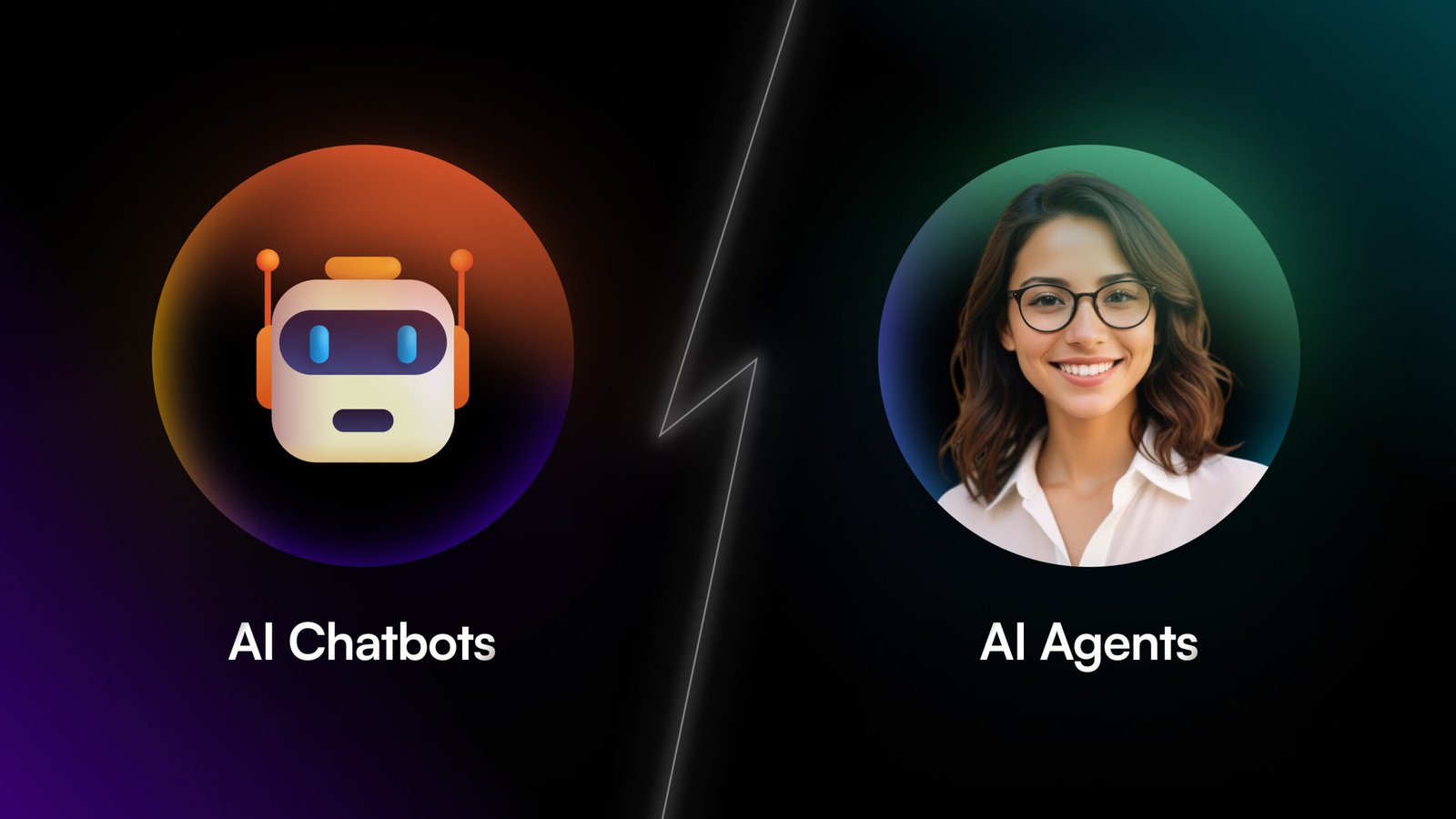
The confusion between “Chatbots” and “AI Agents” is the primary reason many AI pilots fail to scale. A chatbot is a reactive interface designed to handle well-defined, scripted tasks. An AI agent is a goal-oriented system that reasons about complex scenarios and takes independent action across your enterprise stack.
Comparison: Chatbots vs. AI Agents (2026 Standards)
| Dimension | Chatbots | AI Agents |
|---|---|---|
| Autonomy | Reactive: Follows fixed logic; waits for specific user prompts to proceed. | Proactive: Reasons through goals; plans and adapts to achieve outcomes independently. |
| Integration | Surface-level: Connects via basic APIs for simple data retrieval/UI tasks. | Deep-system: Integrates across CRMs, ERPs, and APIs to execute end-to-end workflows. |
| Learning | Static: Requires manual updates to logic or hard-coded decision trees. | Dynamic: Adapts via LLMs, feedback loops, and real-time performance analytics. |
| Memory | Short-term: Context typically resets after every session; limited history. | Long-term: Maintains multi-session memory and structured knowledge (e.g., .md files). |
The Rasa “CALM” Architecture
Expert implementations now favor CALM (Conversational AI with Language Models), a framework championed by Rasa.com. CALM extends the flexibility of LLMs by wrapping them in deterministic logic and built-in recovery patterns. This allows an agent to maintain the “human-like” feel of an LLM while ensuring it never drifts from business-critical rules or compliance requirements.
The “Agentish” Spectrum: From Solver to Executive
Forrester identifies an evolution of autonomy that every leader must understand:
- Solver Agents (Light Agentish): Handles complex flows but requires a prescriptive, rules-based environment.
- Worker Agents (Medium Agentic): Multi-flow systems that can utilize external tools to resolve defined goals.
- Executive Agents (Extensive Agentic): Systems capable of any flow, operating with model-level control and high-level goal-seeking behavior.
The Four Pillars of an Agent
- The Brain: The reasoning model (e.g., Claude 3.5 Sonnet or Opus).
- Memory (CLAUDE.md): Structured, permanent knowledge stored locally or in a vector database.
- Tools (MCPs): The Model Context Protocol (MCP) acts as a standardized “plugin” system for Notion, Slack, and Salesforce.
- Autonomy: The ability to plan, fail, and retry without manual human prompts.
[Placeholder for Infographic: The Forrester Action/Autonomy Grid—Mapping “Agentish” Solver Agents to “Executive” Autonomous Agents]
3. The Economic Imperative: Why Business Leaders Are Investing Now
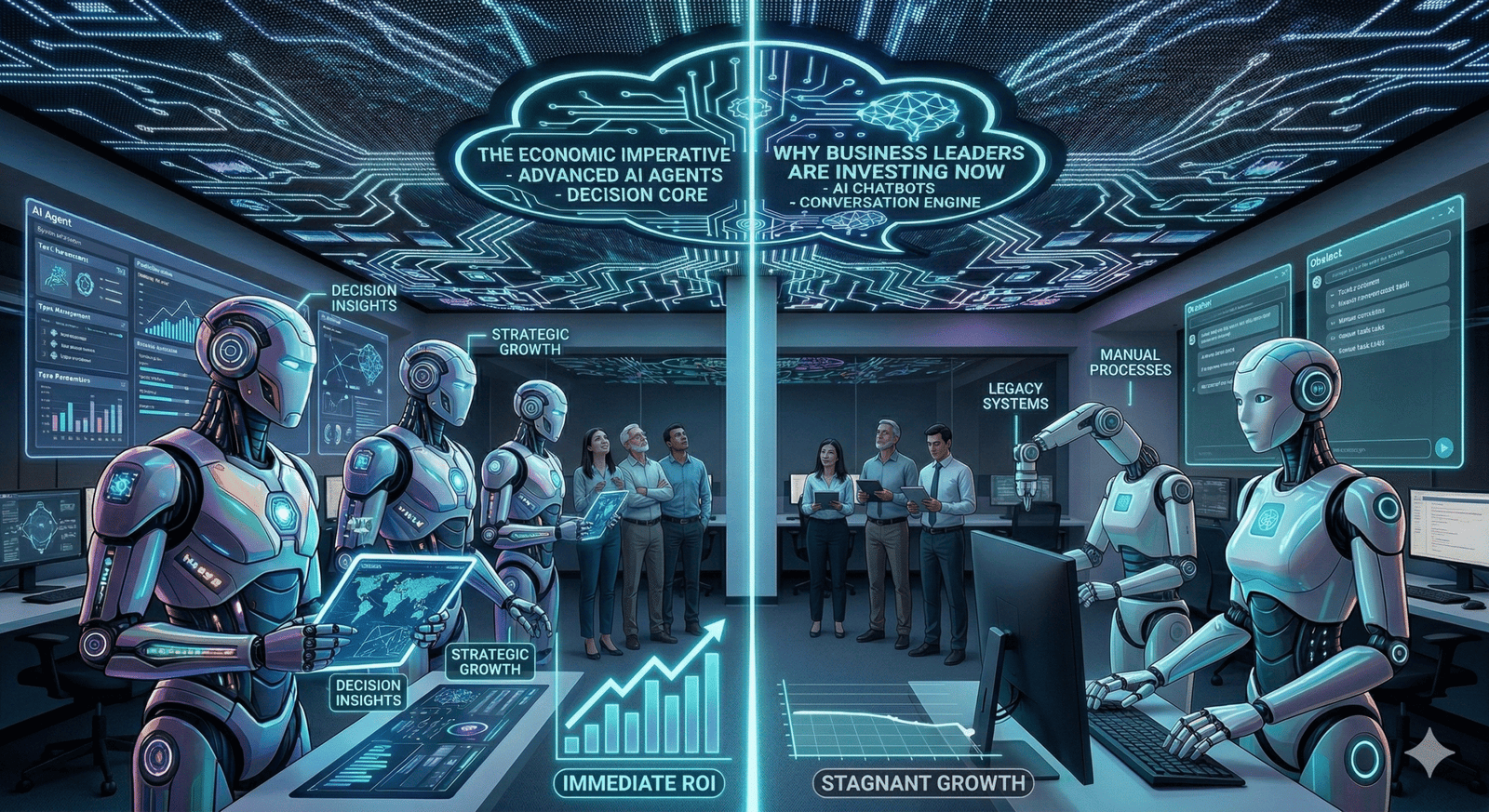
For a composite $2.5B organization with 10,000 employees, the move to agentic AI is not a cost-center—it is a revenue engine. By applying a 7.33% net profit margin baseline (derived from NYU Stern sector averages), the financial impact of agents becomes undeniable.
Go-To-Market (GTM) Transformation
Many organizations are experiencing transformative results as they learn how to build your first AI agent.
Agentic AI increases top-line revenue by 1.3% over three years, resulting in $5.7M in incremental net income.
Investing in the right technologies will significantly simplify how to build your first AI agent.
- Sales Enablement: Agents increase qualified leads by 2.5% and win rates by 5.0 percentage points. Top-tier performers using agents are currently selling 65% more in total volume than those without.
- Market Innovation: By leveraging 40 years of historical data to create “light” versions of premium services, agents help target new market segments, adding $2.4M in net income.
- Response Velocity: Leading firms have reduced RFP response times from weeks to a single day—all while increasing quality.
Understanding market trends will help you determine the best strategies on how to build your first AI agent.
Operations Transformation: The “Labor Mix” Shift
Operational excellence is no longer about adding heads; it’s about optimizing the labor mix.
- Labor Efficiencies: Organizations are seeing 3.2% of open positions (approximately 158 roles for the composite org) go unfilled as agents handle the workload. While Sales and IT roles are always refilled due to their strategic nature, Customer Service is most impacted, with a 6% reduction in necessary new hires.
- External Spend Reduction: A 3.2% reduction in non-COGS external spend is achieved as agents take over tasks previously outsourced (e.g., translation, data cleaning).
- IT Cost Deflection: By Year 3, reliance on fragmented AI tools drops, reducing IT software spend by 6%, representing a $16.2M benefit over three years.
People and Culture
As you adapt to these changes, remember the importance of knowing how to build your first AI agent efficiently.
- Employee Retention: Attrition rates drop by 10% as agents remove the “repetitive and boring” tasks. In IT, teams report significantly higher quality of life, while Legal teams see a 22.8% reduction in contract error rates.
- Onboarding Velocity: The time to ramp up new hires is slashed by 50%. For a salesperson, this means moving from a 6-month ramp to just 3 months, getting them to “revenue-positive” status faster.
4. The Transformation Journey: From Horizon 1 to Horizon 3
Infosys defines the AI evolution through a “Three Horizons” framework. To reach the 120% ROI target, firms must move beyond H1 foundations.
- Horizon 1 (H1): Foundations. Focuses on MLOps platforms, GPU/accelerator clusters, and scripted agents. These are the tools of productivity automation.
- Horizon 2 (H2): Intelligent Blueprints. The 2026 standard. This involves Agentic Orchestration, multimodal understanding (text, audio, video), and multi-agent workflows that plan and reason.
- Horizon 3 (H3): Autonomous Swarms. The frontier. Self-supervised systems, empathetic AI collaborators, and autonomous agent swarms that operate across immersive interfaces (XR).
Top 6 Trends for 2026
- Specialized Multimodal Platforms: Moving away from one-size-fits-all AI to platforms tailored for specific sectors (e.g., BFSI compliance-heavy agents).
- Autonomous Operations: Agents now bridge the gap between traditional rule-based automation and adaptable decision-making.
- GPU-as-a-Service (GPUaaS): Regulated industries are building on-premises GPU training clusters to maintain data sovereignty (e.g., European Telecom case study).
- Alternate Hardware & Cost Efficiency: Using Intel Xeon Gen 6 with AMX sets or AMD EPYC 5th Gen to run Small Language Models (SLMs) efficiently, reducing the Total Cost of Ownership (TCO) for inference.
- Small Language Models (SLMs): These lightweight models are gaining traction for edge devices (IoT, smartphones) due to lower latency and ease of fine-tuning.
- The Cognitive Leap: AI is moving from “execution” (following commands) to “reasoning” (world modeling and predictive behavior).
4. Hands-On: Building Your First AI Agent in 20 Minutes (No-Code Guide)

You can break the chatbot ceiling using Claude Code. This is the transition from “typing questions” to “delegating goals.”
Step 1: The Environment
Access Claude.ai (Pro or Max plan). Download Visual Studio Code (VS Code). Think of VS Code as the “office” where your digital employee sits, and Claude as the employee.
Step 2: Installation & Tools
In VS Code, install the official Anthropic Claude Code extension.
- Pro Tip: Also install the Office Viewer markdown extension to make your agent’s documents readable.
- Pro Tip: Use Wispr Flow for voice dictation. Speaking your goals out loud captures nuance that typing often misses.
Step 3: The “Memory” Breakthrough (The Self-Interview)
This is the most critical step for moving from “Chatbot” to “Agent.” You must create a CLAUDE.md file.
- The Prompt: “Interview me about my work, my goals, my pain points, and my communication style. Ask questions one at a time. When finished, create a structured CLAUDE.md file to serve as your permanent briefing.”
- Why it works: This file becomes the agent’s long-term memory. Every new conversation starts by reading this file, ensuring the agent understands your business context from second one.
Step 4: Tool Integration (MCPs)
Give your agent “superpowers” via the Model Context Protocol (MCP). Ask: “Does [Salesforce/Slack/Notion] have an MCP?” Connecting your task manager (Todoist/TickTick) allows the agent to proactively suggest: “I noticed this task is due; I’ve drafted the report for you.”
Step 5: Deployment (The Atomic Task)
Start with an “Atomic Task”—something small but multi-step.
- The Request: “Conduct a competitive SEO analysis for my new Houston-based plumbing client. Scrape top competitors, identify keyword gaps, and if a site blocks your scraper, find a browser tool to work around it. Format the result as a professional report.” An agent won’t stop at a “blocked” error; it will reason, pick a different tool, and deliver the result.
5. Choosing Your Infrastructure: LangGraph vs. CrewAI vs. AutoGen
For organizations scaling beyond individual agents to production-grade automation, the framework choice defines your long-term maintainability.
LangGraph (The Production Leader)
- Model: Stateful orchestration via state-machine style logic.
- Best For: Production-grade reliability and complex, governed workflows.
- Pros: Explicit control over state transitions and retries; aligns with strict auditability requirements.
- Observability: Use LangSmith for deep tracing and evaluation of every agent step.
- Verdict: The choice for “Executive” agents where failure is not an option.
CrewAI (The Speed Winner)
- Model: Role/Task abstractions.
- Best For: Rapid prototyping and straightforward multi-agent collaboration.
- Pros: Simple mental model; fastest path from concept to working flow.
- Cons: Less explicit control as orchestration complexity grows.
- Verdict: The “Speed-to-Market” choice for moderate-complexity systems.
Microsoft AutoGen (The Research Choice)
- Model: Conversation-centric dialogue loops.
- Best For: Experimental research and testing novel agent interaction designs.
- Pros: Flexible multi-agent dialogue patterns.
- Cons: Can feel less deterministic for rigid production environments.
- Verdict: The best for exploring collaborative agent behaviors in a lab setting.
6. Industry-Specific Use Cases & Success Metrics
Agentic AI delivers measurable value by automating the “judgment” portion of a task, not just the “text” portion.
| Industry | Chatbot Use Case (Reactive) | AI Agent Use Case (Proactive) | Success Metric |
|---|---|---|---|
| Finance | Checking account balances. | Autonomous loan processing and real-time fraud detection. | 16.4% reduction in cost per finance request. |
| Retail | Answering store hour FAQs. | Resolving multi-step returns and personalized loyalty offers. | 9.9% increase in order accuracy rates. |
| Legal | Searching for contract terms. | Autonomous contract review and error detection. | 22.8% reduction in contract error rates. |
| HR | Answering holiday policy FAQs. | End-to-end employee onboarding and self-service lifecycle management. | 10.3% reduction in issue resolution time. |
Case Study: European Telecom GPUaaS
A leading European Telecom provider avoided massive hardware ownership costs by developing a sovereign GPUaaS platform. By providing secure, high-performance GPU infrastructure to their clients, they supported large-scale model training while ensuring 100% data sovereignty in a highly regulated environment.
7. The “Bytbloom” Implementation Checklist: Navigating Risk and Governance

Transitioning to autonomous systems requires a disciplined framework. With 87% of developers expressing concerns about agent accuracy, governance is your “brakes” that allow you to go fast.
5 Assessment Criteria for Agent Deployment
- Task Complexity: Is this a rule-bound task (Chatbot) or a judgment-based workflow (Agent)?
- Compliance Risk: Are there regulatory constraints (GDPR, HIPAA) that limit autonomy?
- Integration Needs: Does the agent require “write” access to your ERP or just “read” access to an FAQ?
- Autonomy Tolerance: Are you comfortable with “Black Box” decisions, or do you require Human-in-the-Loop approvals?
- ROI Goals: Are you looking for short-term cost deflection or a Horizon 2 business transformation?
Strategic Tip: To manage your digital workforce effectively, use a specialized budgeting tool to track your “Digital Employee Payroll.” You can download our AI Transformation Readiness Survey to benchmark your organization against Horizon 2 standards.
Conclusion: The Future of the “Intelligently Connected Ecosystem”
The shift from 2025 to 2026 is defined by the leap from execution to reasoning. We are no longer building tools that follow scripts; we are building partners that understand intent, learn from feedback, and operate across a global stack of APIs.
By breaking the “Chatbot Ceiling” and adopting agentic orchestration, your business unlocks efficiencies that were previously gated by human bandwidth. The era of the “Digital Employee” has arrived. It is time to stop chatting with AI and start delegating to it.
Stay Ahead of the Agentic Revolution. Subscribe to our 2026 Digital Trends Newsletter at bytbloom.com for deep dives into SLMs, MLOps, and the next wave of autonomous swarms.
In conclusion, the future is bright for those ready to embrace how to build your first AI agent.
In this era, mastering how to build your first AI agent is more crucial than ever.