
The business world is shifting at an unprecedented pace. In 2025 simply having a great product or service is no longer enough but success now depends on how you structure your business model to capture value, scale quickly and adapt to rapid change. With artificial intelligence, sustainability, platform ecosystems and new pricing paradigms converging, companies are unlocking entirely new ways of doing business. According to recent analysis, AI alone is projected to reach a global market value of US$1.8 trillion by 2030.
In this guide, we’ll explore the top 10 business models that are dominating 2025 by explaining why each works by showing real-world examples and provide actionable steps you can use to apply these models (or combination of them) to your own business or startup. Whether you’re an entrepreneur or startup founder or strategy-minded executive this deep dive will help you stay ahead in a rapidly changing business landscape.
1. Subscription Ecosystems
Rather than a one-time sale now businesses build a recurring relationship with customers by offering value continuously and generating predictable revenue. This is no longer limited to magazines and software it’s expanding into fashion, wellness, utilities and even hardware bundles.
Why It Dominates in 2025
- Recurring revenue increases business stability and valuation.
- With AI and data analytics, companies can personalise the experience, improving retention and reducing churn.
- Consumers increasingly prefer “access over ownership”
Real-World Example
A wellness brand offers a monthly subscription for curated supplements + an AI-driven health coaching app driving both high margin and strong customer loyalty.
How You Can Use It
- Identify a core product or service you provide and wrap it in a subscription.
- Offer tiered pricing (basic, premium, VIP).
- Use data to personalise and upsell.
- Ensure you have systems in place for retention and continuous value.
2. AI-Native Micro-SaaS
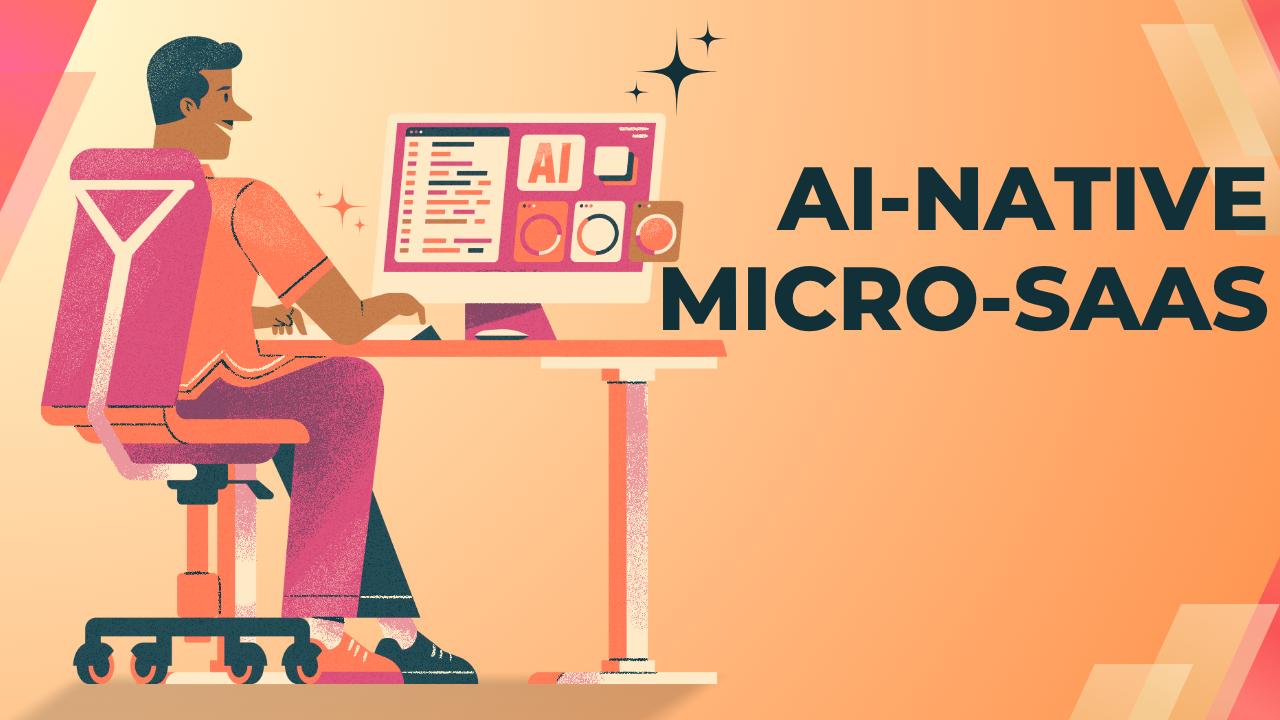
AI-Native Micro-SaaS refers to small hyper-focused software-as-a-service tools built to solve very specific problems for niche audiences but powered by AI for automation, personalization and scalability.
These lightweight, affordable products have exploded in 2025 because AI APIs, no-code builders and low-code platforms make development faster and cheaper than ever. With minimal costs, high profit margins and predictable recurring revenue, Micro-SaaS has become the go-to business model for solo founders and small teams. As more companies shift away from bulky, one-size-fits-all software, the demand for specialized AI-driven micro-solutions continues to rise—making AI-Native Micro-SaaS one of the most accessible and profitable business models of 2025.
Real-World Example
An AI-powered tool that helps small finance firms automatically generate compliance-ready risk reports; users pay a monthly fee.
How You Can Use It ?
- Choose a narrow problem you understand.
- Build a lightweight SaaS with AI-capabilities (e.g., chatbot, analytics, automation).
- Launch with a simple pricing model and iterate based on feedback.
- Use content marketing to target very specific keywords (e.g., “AI risk reporting tool for SMEs”).
3. Creator-Led Brands
What It Is
Brands founded, built and promoted by creators — influencers, online personalities or subject-matter experts. These brands leverage the trust, audience and authenticity of the creator.
Why It Dominates in 2025
- Authenticity matters more than ever.
- Established audiences reduce customer acquisition cost.
- Brands can expand into subscriptions, physical products, digital products, experiences and community.
Real-World Example
A YouTuber turns their audience into a lifestyle brand with apparel, monthly membership and digital products.
How You Can Use It
- Build your personal brand and niche audience (e.g., business strategy, AI for startups).
- Identify products or services your audience would buy.
- Launch limited products, iterate and scale.
- Leverage content to promote and create community.
4. Circular-Economy Marketplaces

What It Is
Marketplaces and platforms that enable reuse, resale, refurbishment and sharing of goods — reducing waste and linking sustainability with commerce. Business Model Analyst+1
Why It Dominates in 2025
- Consumers, especially Gen Z & Millennials, demand purpose-driven businesses. growett.com
- Regulatory & supply-chain pressures make linear models less viable.
- Platforms create network effects and recurring transactions.
Real-World Example
An online platform that allows users to rent or resell high-end gear (e.g., camera equipment, fashion, electronics) and takes a percentage per transaction.
How You Can Use It
- Identify a category with high value and low reuse currently.
- Build or join a marketplace.
- Focus on trust, logistics and user experience.
- Use subscription + transaction fee combination for revenue.
5. Pay-Per-Outcome (PPO) / Performance-Based Models
The pay-per-outcome (PPO) business model is built on a simple idea: clients only pay when a specific, measurable result or outcome is delivered, rather than paying upfront for a product or service. This shifts the risk away from the customer and places full accountability on the provider, which is why it has become increasingly popular across industries. In 2025, this model dominates because it perfectly aligns the incentives of both parties, strengthens long-term trust, and encourages performance-driven partnerships. It’s especially powerful in high-stakes fields like marketing, consulting, health tech and SaaS—where measurable improvements such as conversions, revenue growth, cost reduction, or user retention can be directly tied to the provider’s work. By tying payment to results, businesses demonstrate confidence in their capabilities, attract more clients and create deeper, more sustainable relationships.
Real-World Example
A digital marketing agency charges clients only when they achieve agreed-upon metrics (e.g., conversions) rather than standard retainers.
How You Can Use It
- Identify a measurable result you can deliver (e.g., “50% cost reduction”, “x% revenue growth”).
- Set clear metrics and contract terms.
- Use technology to track outcomes transparently.
6. Platform-Ecosystem Models
Platform-ecosystem models are business structures that connect multiple parties—such as users, creators, businesses, and service providers—to enable seamless interactions and transactions within a single environment. Instead of selling a product directly, the platform becomes the infrastructure where value is exchanged, allowing different participants to interact, buy, sell, collaborate, or share resources. In 2025, these models dominate because they leverage powerful network effects: the more users who join the platform, the more valuable it becomes for everyone involved. Platforms also generate scalable revenue through transaction fees, subscriptions, data insights, and ecosystem partnerships, making them one of the most profitable and sustainable models of the decade.
A strong real-world example is a modern logistics platform that connects small shippers, independent carriers, warehousing partners, and tracking tools—giving each party what they need in one unified system. Revenue flows through a mix of monthly subscriptions, transaction fees, and premium service upgrades.
eg: bytbloom.com
How You Can Use It
- Build an MVP to connect two or more sides of a market.
- Focus on building trust and making first interactions seamless.
- Monetise via transaction fees, subscriptions and data insights.
7. Experience-as-a-Service (XaaS)
What It Is
Rather than selling products or standard services, businesses sell immersive experiences on a subscription or pay-per-use basis — often leveraging technology like AR/VR or bundled services. Business Model Analyst
Why It Dominates in 2025
- Consumers and businesses are valuing experiences over ownership.
- Technology enables scaled, personalised experiences.
- Recurring revenue plus differentiation.
Real-World Example
A travel brand offers a subscription that gives members access to immersive VR previews of destinations, virtual events and curated experiences.
How You Can Use It
- Identify an experience your customer deeply values.
- Package and deliver it via digital platforms (and optionally physical components).
- Use membership or subscription model for recurring revenue.
8. Micro-Niche Marketplaces
Micro-niche marketplaces are platforms designed to serve very specific, narrowly defined customer segments, unlike broad, general marketplaces such as Amazon or Flipkart. These hyper-focused platforms thrive because they attract highly targeted users who share similar interests, values, or needs — which naturally builds strong community trust. In 2025, this model is booming because competition is lower, marketing becomes more efficient, and it’s easier for a brand to dominate a small niche before scaling to a wider audience.
A great example is a curated marketplace that focuses exclusively on sustainable pet-care products, offering eco-friendly toys, grooming essentials, and organic treats for environmentally conscious pet owners.
You can link to a real-world example such as: EarthHero’s Pet Category — a sustainability-focused marketplace showcasing eco-conscious pet products.
How You Can Use It
- Pick a narrow niche you know well.
- Build a marketplace or storefront just for that niche.
- Use content marketing to dominate that keyword space.
9. Subscription + Physical Bundles

What It Is
Combining digital subscription or service with physical product delivery — blending digital and real world. Business Model Analyst
Why It Dominates in 2025
- Provides tangible value (physical) plus ongoing services (digital) — strong mix.
- Raises loyalty and lifetime value.
- Works well for premium segments.
Real-World Example
A coffee brand delivers premium beans monthly plus an AI-powered brewing app that monitors usage and taste preferences.
How You Can Use It
- Identify a physical product you can deliver regularly.
- Add digital component (community, analytics, app).
- Price accordingly and build around retention.
10. Decentralised Autonomous Organisations (DAOs) & Web3-Enabled Models
In 2025, Decentralized Autonomous Organizations (DAOs) are redefining how modern businesses operate. Unlike traditional companies that rely on hierarchical leadership, DAOs are structured through blockchain-based governance, where rules, decisions, and ownership are transparently recorded on smart contracts. This model enables a system of tokenized participation, where users or contributors hold governance tokens that grant them voting rights and the ability to influence how the organization evolves. Because operations run on decentralized protocols rather than centralized management, DAOs offer a level of trust, transparency, and community-driven ownership that traditional models cannot match. This makes them especially attractive to younger, tech-savvy audiences who value inclusivity, transparency, and digital asset ownership.
DAOs dominate the 2025 landscape because they foster shared ownership, allowing anyone holding governance tokens to propose, fund, or vote on important changes. They also unlock new monetization channels, such as token sales, staking rewards, NFT-backed memberships, and governance fee revenue. Moreover, they fuel deeper community engagement, since contributors directly benefit from the DAO’s growth. Decision-making becomes faster, global, and democratic, offering a unique competitive edge in sectors like gaming, finance, creative arts, open-source development, and digital communities.
A powerful real-world example is Aave DAO, a decentralized finance protocol governed entirely by its token holders. Through a transparent on-chain voting system, the community collectively decides on updates, risk frameworks, and treasury allocation — creating a fully community-owned financial ecosystem.
DAOs illustrate how Web3 is transforming business structures, shifting authority from top executives to the very users and contributors who help a platform grow. As tokenized digital economies expand, DAOs continue to lead as one of the most innovative and future-proof business models of 2025.
How You Can Use It
- Understand regulatory risks and token economics.
- Build a community around your mission.
- Monetise via tokens, platform fees, and premium features.
How to Choose the Right Model for Your Business ?
- Understand your value proposition — what problem you solve and for whom.
- Select the business model that tightly aligns with that value.
- If your offering is ongoing service → go subscription or micro-SaaS.
- If you’re building a platform → ecosystem or marketplace model.
- If you’re targeting sustainability-minded customers → circular economy or experience service.
- Validate quickly with a minimum viable model — use lean startup methodologies.
- Focus on scalability — models that allow recurring revenue, customer retention, network effects.
- Leverage data, AI and automation — modern models use tech as the backbone (see research on GenAI as business-model shift).
Actionable Steps to Implement in 2025
- Conduct a business model audit of your existing business: map current revenue, costs, value delivery and customer segments.
- Experiment with one new model — e.g., convert one product into subscription.
- Use content marketing to position yourself as a thought-leader in that model (blog posts, internal links, case studies).
- Build automation & AI into operations early: chatbots, analytics, process automation.
- Monitor metrics: recurring revenue %, churn rate, customer acquisition cost (CAC) vs lifetime value (LTV).
- Iterate and scale: Once you validate a model, layer on next model (e.g., combine subscription + physical bundle, or micro-SaaS + marketplace).
Conclusion
In a world where change is the only constant, the winners in 2025 are not just those with great ideas — they’re those with innovative business models that match the speed, scale and expectations of this era. Whether you adopt a subscription ecosystem, build an AI-powered micro-SaaS, leverage creator-led branding, or tap into decentralised platform models — the key lies in choosing a model aligned with your customer, delivering value consistently, and scaling smartly.
At BytBloom, we believe your strategy matters as much as your product. Explore more insights on business strategy, passive income, and next-gen models by visiting our other posts and building your business with future-proof foundations.